
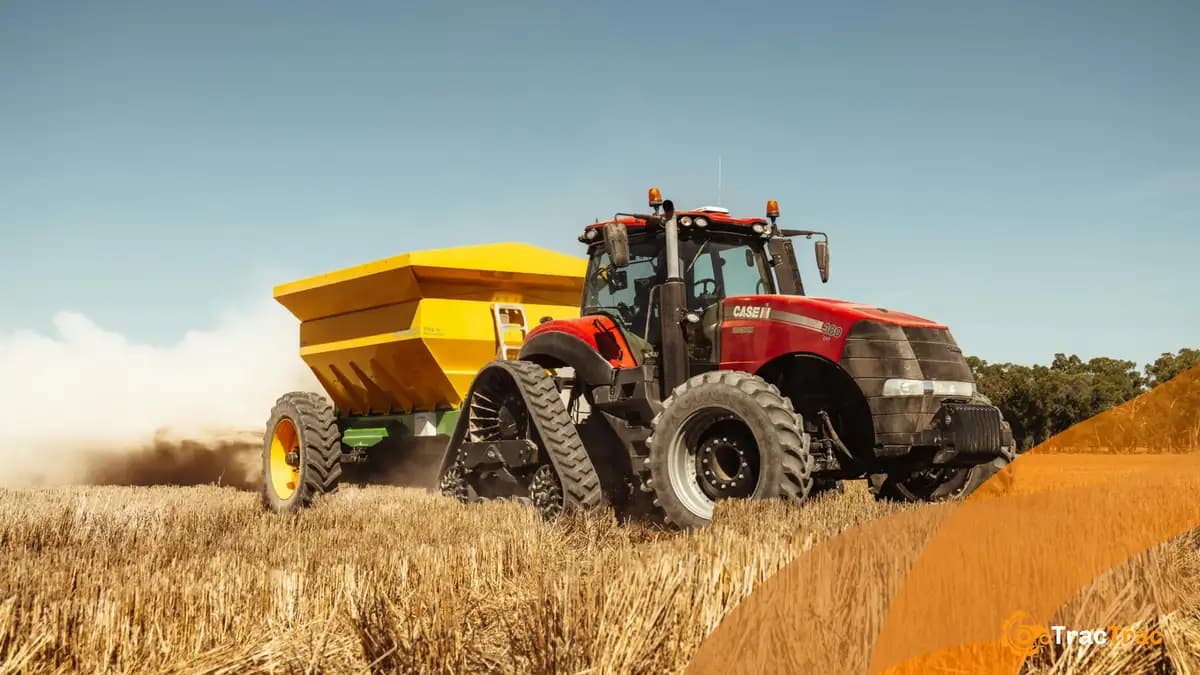
In Jalingo, Taraba State, the cost of ploughing one hectare rose from ₦32,000 in the 2025 farming season to ₦120,000 by May 2026, according to Daily Trust. In response, some farmers in Bali Local Government Area returned to using oxen for ploughing. At approximately ₦70,000 per day, compared with ₦200,000 for tractor hire, the option was considerably cheaper, even though it took longer to complete the work.
This reflects the challenges farmers face when trying to access tractor services in Nigeria. Hiring costs have increased, prices vary considerably across states, and finding reliable, publicly available pricing information remains difficult. This guide examines the different sources of tractor hire services, prevailing rental rates for the 2026 farming season, the factors that determine these costs and what farmers should check before hiring a tractor.
Why most Nigerian farms hire rather than buy
Nigeria's tractorisation index sits at roughly 0.027 horsepower per hectare, about six tractors for every 10,000 hectares of farmland, against an FAO benchmark of 1.5 hp per hectare. A 2023 survey by the National Centre for Agricultural Mechanization put Kwara State lower still, at 0.019 hp per hectare.
The cost of owning a tractor explains most of that gap. Ajibola Tajudeen, national vice president of the All Farmers Association of Nigeria(AFAN), priced a new tractor at ₦50 million to ₦75 million depending on capacity, with commercial lending running at 20 to 25 per cent interest. A machine that earns money for six or eight weeks of land preparation and then sits idle cannot service that kind of debt.
Hiring solves the utilisation problem. FAO farm power research by Sims and Kienzle found that a family working with human power alone covers about 1.5 hectares a year, draught animals take that to roughly 4, and tractor power pushes it beyond 8. With average farm sizes at about 0.5 hectares in the south and 4 hectares in the north, hire services are the only realistic route to mechanised land preparation for most Nigerian farmers.
Also Read: Top 5 Tractors for Farming in Nigeria and Their Prices
Tractor hire companies in Nigeria: The four types of providers
1. Mechanisation service providers and hailing platforms like TracTrac Plus
These are businesses that own or aggregate fleets and sell mechanisation as a service. Booking for a tractor happens through an app, a call centre, or a field agent. The TracTrac Plus app sits in this category, alongside operators like Hello Tractor.
Research by Daum and colleagues, published in World Development, highlights the critical role agents play in making digital tractor-hire services work in Nigeria. Booking agents pool demand from several smallholders in one locality for roughly a 10 per cent commission, and a pooled request carries the farmer's details, location, service required, land size, and the state of the plot, including whether it holds trees, stumps or stones. That last detail determines which tractor and implement gets dispatched.
2. Federal and state mechanisation schemes
The Renewed Hope National Agricultural Mechanisation Programme is one of the Federal Government’s major efforts to expand access to mechanisation. The programme covers 2,000 tractors and more than 9,000 implements, supported by a ₦50 billion catalytic fund from the Bank of Industry. Under the arrangement, the Bank of Agriculture oversees distribution, with subsidised tractors going to mechanisation service providers rather than individual farmers. The idea is to make each tractor serve as many farmers as possible. As Bank of Agriculture Managing Director, Ayo Sotinrin, explained, a high-capacity tractor can complete a smallholder farmer’s one-hectare plot in about two hours, leaving it available to work on other farms. Each tractor is expected to cover around 600 hectares annually, with satellite GPS used to monitor its operations.
Similar efforts are taking shape at the state level. In Katsina, the government has approved mini mechanisation centres across all 34 local government areas, with ten tractors allocated to each centre. Kwara State has also distributed 16 tractors under the ACReSAL initiative.
However, access to subsidised machinery does not always guarantee a smooth experience. Farmers in Kogi State told Daily Trust that tractor hire fees had increased from ₦300,000 in 2025 to ₦600,000 in 2026. They also raised concerns about being responsible for repair costs when machines broke down, sometimes in the middle of farm operations. These experiences are worth keeping in mind when considering public mechanisation schemes. Before hiring, find out about the condition of the tractor, who is responsible for repairs and what happens if a breakdown delays your work.
3. Cooperatives and farmer associations
Cooperatives like TOHFAN buy or receive equipment and allocate it among members, usually at below-market rates with priority given by membership standing. Access depends on your position in the queue. TracTrac has established 566 cooperatives through its work on the ISSAM project, and cooperative membership remains one of the cheapest routes to a machine in the peak weeks. Many people do not understand how a mechanisation cooperative works, but we did justice to that in this article.
If you will like to join a TracTrac formed mid or large sized cooperative, click this link.
4. Independent owner-operators
Independent tractor owners make up a significant part of Nigeria’s mechanisation service market, even though they are often less visible than government-backed programmes and organised service providers.
Research by Hiroyuki Takeshima at IFPRI offers an interesting insight into this group. It found that tractor owners who purchased their machines independently tend to cover more farmland at lower costs than those who received tractors through government programmes. They are also more likely to remain active outside the peak farming season and choose implements that are better suited to the soil they work on.
This is an important consideration when choosing a tractor service provider. Independent owners often have a stronger incentive to keep their machines productive and maintain a sustainable business. Where possible, look beyond the availability of a tractor and consider the operator's experience, equipment and track record.
What is actually inside a tractor hire quote
Several factors determine how much you pay to hire a tractor; understanding them helps you assess whether a quote is reasonable and what you are actually paying for.
Diesel accounts for a significant share of the cost: In Taraba, the paramount ruler of Mutum Biyu reported that a 25-litre jerrycan of diesel costs between ₦60,000 and ₦70,000; a full day of tractor operation can consume two to three jerrycans. This amounts to 50 to 75 litres daily. If a mid-sized tractor covers two to three hectares in a day, fuel alone could account for approximately ₦37,000 to ₦82,000 per hectare. This explains why fuel prices have a direct impact on tractor hire rates.
Ploughing depth also affects the cost: Research on disc ploughing in loamy-sand soils in South-East Nigeria, published in Scientific African, found that fuel consumption increases with ploughing depth. Each additional centimetre of cutting depth adds approximately 0.78 litres of diesel per hectare. The study recorded optimum fuel consumption of 20.51 litres per hectare at a depth of 18.56 cm; increasing the depth to 30 cm raised consumption to 31.25 litres. At current diesel prices, this difference can significantly increase operating costs. It also means that farmers should confirm the agreed ploughing depth before work begins, rather than focusing only on the price per hectare.
Getting the tractor to your farm comes at an additional cost: Mobilisation is usually charged separately from the actual tractor operation. Farmers in Nasarawa reported daily rates of ₦100,000 to ₦150,000 for farms with good road access and located close to the machine. Where the tractor needs to be transported on a heavy-duty vehicle to reach the farm, the cost can rise to between ₦200,000 and ₦300,000.
Soil type and terrain influence operating costs: Farms in lowland areas may attract higher charges than upland farms because of their heavier clay soils. A resident familiar with tractor operations in Kwara highlighted this difference; it is also supported by the engineering considerations involved in tractor operation. Disc ploughs achieve optimum field efficiency at approximately 6 km/h in clay-loam and loamy-sand soils, compared with 7 km/h in sandy-clay. Differences in ground speed affect how long a tractor takes to cover a hectare, as well as its fuel consumption.
The implement required for the job matters too: Tractor hire rates vary depending on the operation being carried out. Ploughing, harrowing, ridging and harvesting require different implements, power levels and operating speeds; they are therefore priced differently. For instance, ridgers can operate efficiently at around 9 km/h across three dominant southern soil types. This can make ridging less expensive than ploughing on the same farm, although the final rate will depend on the equipment and field conditions.
Average rental prices for tractors in Nigeria, 2026 season
The following rates were reported by farmers, tractor operators and associations across selected Nigerian states in May 2026. Prices vary depending on the type of operation, location, soil conditions and accessibility of the farm.
1.Taraba State (Jalingo)
- Ploughing: ₦120,000 per hectare, up from ₦32,000 in 2025.
2. Benue State (Makurdi)
- Ploughing: ₦65,000 to ₦75,000 per hectare.
- Harrowing: ₦40,000 to ₦50,000 per hectare.
- Hello Tractor listed rates: ₦70,000 for ploughing, ₦65,000 for harrowing and ₦65,000 for ridging per hectare.
3. Kwara State
- Ploughing (single pass): ₦50,000 per hectare.
4. Nasarawa State
- Lafia (full day, with good farm access): ₦100,000 to ₦150,000.
- Akwanga (full day, where the tractor must be transported to the farm): ₦200,000 to ₦300,000.
5. Kogi State
- State-supported tractor hire scheme: ₦600,000 per season, up from ₦300,000 in 2025.
These figures provide a useful reference when comparing tractor hire offers; however, they should not be treated as fixed national rates. Always confirm what each quote covers, including mobilisation, fuel, the number of passes and any additional charges.
How much it costs to hire a tractor per hour
Per-hour tractor hire rates require careful consideration because the time taken to complete a job can vary significantly depending on the tractor size, soil type and field conditions.
According to the National Centre for Agricultural Mechanisation (NCAM), a 30 to 50 hp tractor has a field capacity of approximately 0.15 to 0.25 hectares per hour. This means it could take between four and nearly seven hours to cultivate one hectare using a smaller machine. Larger tractors with wider implements can cover about half a hectare per hour under favourable conditions.
Consider the ₦70,000 per hectare ploughing rate reported in Benue. A larger tractor covering half a hectare per hour would earn the operator the equivalent of ₦35,000 per hour. If heavy clay soil reduces its working speed by half, that drops to approximately ₦17,500 per hour.
The difference between the two pricing arrangements is important. With a per-hectare agreement, the operator bears the cost of working slowly because payment is tied to the area completed. With an hourly agreement, you pay for every additional hour, even when difficult soil conditions or inefficient operation extend the job.
Research on disc ploughing also found that field efficiency can range from 68% to 80%, depending on operating speed and ploughing depth. For this reason, a per-hectare rate is generally easier for farmers to budget for. If the operator charges by the hour, agree on the estimated completion time and a maximum number of billable hours before work begins.
Also Read: Beyond Tractors: How ISSAM Project Is Powering Rural Farming with Labour-Saving Devices
What to check before you pay for farm work
The core problem in tractor hire is that quality is hard to verify after the fact. Daum and colleagues identified it precisely: consistent ploughing depth is close to impossible to confirm once the work is finished, which makes the terms you set beforehand the only real protection you have. Here is your final checklist:
- Measure your land before you make the call: A resident of a farming community in Kwara described the standard practice: operators arrive, assess the field by eye, quote a figure, and negotiate from there. Walking into that conversation with a verified hectarage removes the single largest source of dispute.
- Fix the unit of measurement in writing: Hectare, acre, plot and local measures are used interchangeably in different states, and the gap between an acre and a hectare is a factor of 2.47. Agree which one the price refers to.
- Specify depth, passes and finish: State the ploughing depth in centimetres, the number of passes, and what the field should look like when the work is done. Given that depth costs the operator real diesel, an unspecified depth will drift shallow.
- Inspect the implement, not just the tractor: Check disc wear and sharpness, hitch pins and linkage, hydraulic lift response, PTO condition, and tyre tread. A sound tractor pulling a worn plough will not give you the result you paid for.
- Ask about the operator: Machine operation is skill-intensive, and work quality varies considerably between operators on identical equipment. Ask how many seasons the person has run this implement on this soil type.
- Time your booking against the season: Land preparation windows are short and every farmer in your rainfall zone needs the machine in the same fortnight. Book before the rains settle.
- Verify the provider and stage the payment: Confirm the business exists, check that the machine matches what was quoted, and hold a meaningful portion back until you have walked the field
Booking through TracTrac Plus
The TracTrac Plus app lets you request a tractor from your phone, specify the operation and land size, and match with vetted providers working near you. Bookings are logged, providers are verified, and the terms are set before the machine leaves for your farm. It is available on the Google Play Store and iOS App store.
Click here to get the app.
Frequently Asked Questions
Which companies offer tractor hire services in Nigeria? Four kinds of provider operate in the market. Mechanisation service companies and hailing platforms such as TracTrac Plus and Hello Tractor aggregate fleets and dispatch machines on request. Federal and state schemes, including the Renewed Hope National Agricultural Mechanisation Programme and state centres in Katsina and Kwara, deploy subsidised equipment, now channelled mainly through service providers. Cooperatives allocate machines among members. Independent owner-operators make up the largest group, and IFPRI research suggests those who bought their machines commercially deliver more area at lower cost than those who received them through public programmes.
How much does it cost to hire a tractor per hour? Hourly rates depend on machine size and ground conditions. NCAM puts a 30 to 50 hp tractor at 0.15 to 0.25 hectares an hour, so a hectare takes four to seven hours; larger machines manage around half a hectare an hour. Applying 2026 per-hectare rates of ₦50,000 to ₦75,000, hourly equivalents land roughly between ₦17,500 and ₦35,000. Per-hectare pricing is safer for the farmer because slow work then costs the operator.
Where can I hire a tractor near me in Nigeria? Directory listings age badly because tractor supply has low spatial mobility and highly seasonal use, with IFPRI data showing owners logging around 150 hours in June against 44 in September. The TracTrac Plus app shows live availability near you, matched to the implement you need, with your booking position recorded. Cooperative membership and your state ADP office are also worth checking.
What are the average rental prices for tractors in Nigeria? In the 2026 season, ploughing ran ₦50,000 per hectare in parts of Kwara, ₦65,000 to ₦75,000 in Benue, and ₦120,000 in Taraba. Harrowing in Benue ran ₦40,000 to ₦50,000 per hectare, with ridging around ₦65,000. Day rates in Nasarawa were ₦100,000 to ₦150,000 for accessible farms and ₦200,000 to ₦300,000 where the machine had to be transported in. Diesel drives most of the variation, at 50 to 75 litres for a full working day.
What should I consider before hiring a tractor for farm work? Measure your land first, since operators commonly quote by visual assessment. Agree the unit of measurement, because acres and hectares differ by a factor of 2.47. Specify ploughing depth in centimetres and the number of passes, as each additional centimetre costs the operator around 0.78 litres of diesel per hectare and unspecified depth tends to drift shallow. Inspect the implement as closely as the tractor, ask about the operator's experience with your soil type, book ahead of the peak window, and stage your payment so a portion is held until you have inspected the field.